.svg)


ERTMS: the future of European railways is underway
Have you ever taken a train connecting two European countries?
Behind this apparently simple journey lies an immense challenge: to bring together different rail signalling systems, inherited from the history of each country. This is precisely the role of the ERTMS (European Rail Traffic Management System): a standardized signalling system for international railways, guaranteeing security, efficiency and interoperability.
This article is the first in a series dedicated to this strategic topic for the future of railways. Today, we are offering you a trip back in time and a dive into the basics of ERTMS: where does it come from, how does it work, and above all... where does it take us?
A bit of history: from Meudon to Europe
It all started in 1842 with the first major French railway disaster, in Meudon. While railway operations were only in its infancy, a serious railway accident took place: a train derailed in Meudon, while transporting passengers on the occasion of King Louis-Philippe's feast day. It is the first railway disaster recorded in France. It officially caused 55 deaths and over 150 injuries.
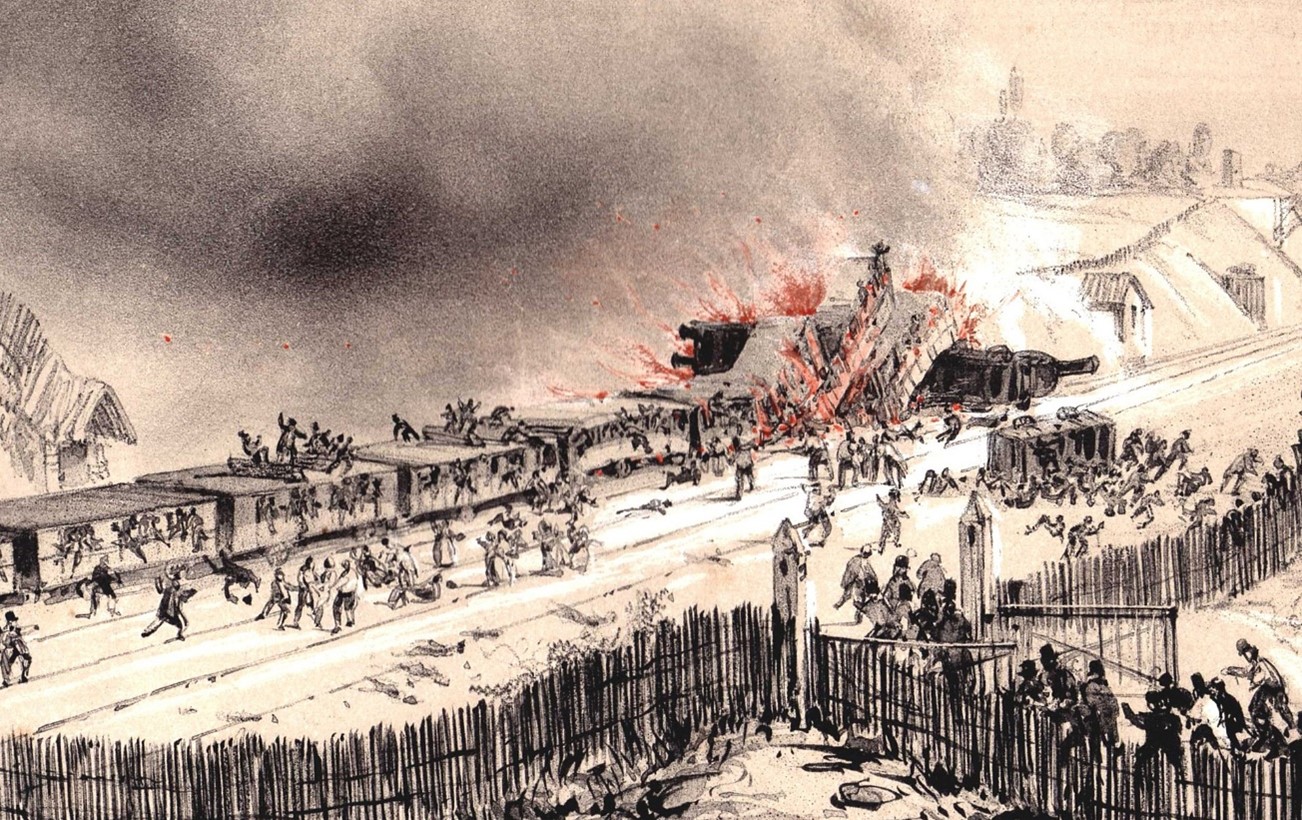
This tragedy made an impression and triggered an awareness: safety must be at the heart of rail transport.
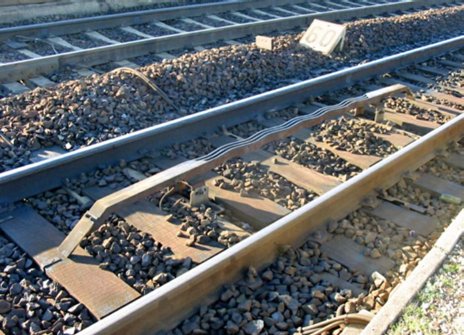
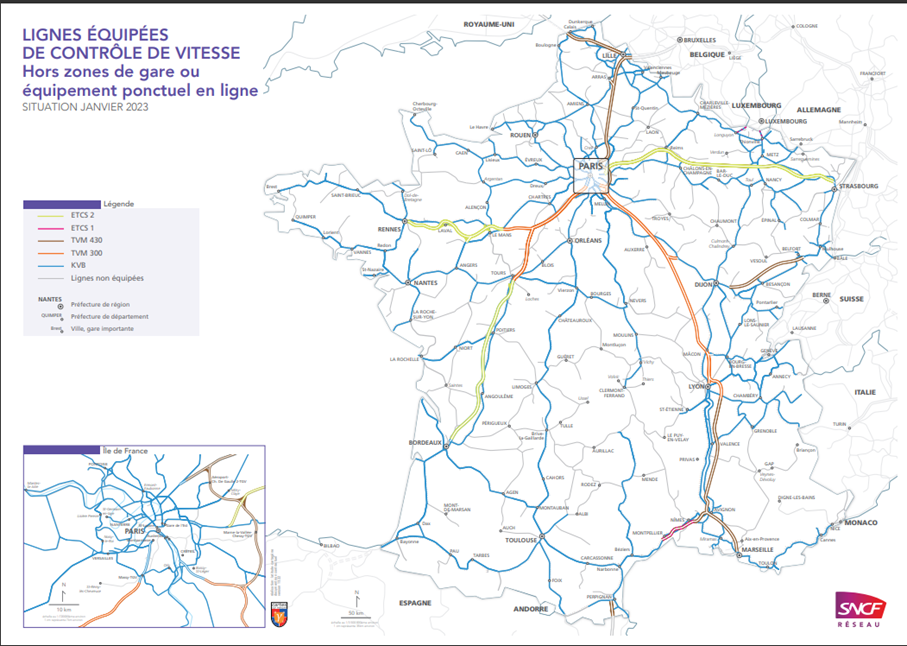
From There, Innovations Such as the Famous crocodile In 1872 (a device that requires the driver to confirm vigilance in the cabin) then, later, ATC (automatic control systems) such as the KVB (Beacon Speed Control) Or the TVM (Machine Track Transmission) for high speed lines.
In the 90s, one observation emerged: each country developed its own systems, which were effective but incompatible with each other. Europe then decided to harmonize and launch ERTMS, with manufacturers united under the consortium. UNISIG. The objective: to speak the same railway language across the continent.
It is important to keep in mind that all ATC systems (KVB, TVM, ERTMS) aim to avoid the 5 major railway risks:
- Catching up: a train is traveling on the same track as another and catches up with it creating a collision
- The Sling Grip: A Train That Hits Another On The Side
- Nose to nose: face to face between 2 trains.
- Overspeed and derailment: a train leaves the rails after taking a turn with too much speed.
- Obstacle: impact with an obstacle on the rails.
In order to avoid these 5 major risks, ATC systems make it possible to know if the cantons (sections of track) in front of the train are free and at what speed the train is authorized to travel. We call it movement authority.
Concretely, what is ERTMS?
ERTMS is based on two main components:
THE ETC (European Train Control System), for train control and signaling, and The GSM-R, a dedicated radio communication system. It is composed of ground beacons, an on-board computer (the EVC) and a euroantenna to receive ERTMS beacons (the system is similar in principle to the KVB, as well as to the principle of several systems across Europe).
Its operation is divided by Thirds, from the simplest to the most advanced.
Levels without ERTMS ground signs.
Trains equipped with ERTMS do not only run on tracks that only have ERTMS. They also have ATC systems different from ERTMS (TVM for example). The ERTMS must therefore manage cases where one does not drive on lanes equipped with ERTMS signs.
- Level 0: No train control system (no ERTMS or other ATC). The ERTMS on-board will still limit the maximum speed of the train, and reads any beacons indicating a change in level.
- The NTC level (National Train Control): The train control system is the national system (KVB or TVM for France). ERTMS reads any beacons indicating a change to a level with ERTMS signage.
The levels with ERTMS ground signs.
- Level 1: It allows the punctual transmission of information by eurobeacons (ERTMS beacon). In addition, there is the lateral signaling of the line (sign, traffic light, etc.). The movement authority is given by the beacons.
- Level 2: This level has the occasional transmission of information by eurobeacons (ERTMS beacon). In addition, a radio link with the RBC (Radio Block Centre) is established via GSM-R. It is this radio link that gives the train the authority to move.
In summary: ERTMS guarantees that drivers always have reliable information at their disposal, whether they are driving in France, Spain, Italy or elsewhere in Europe.
But what is the future for ERTMS?
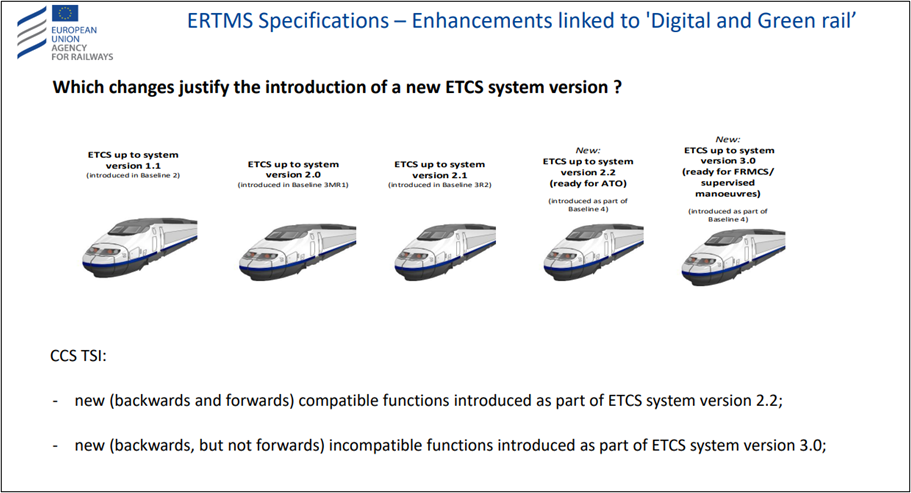
ERTMS is not static: it is still evolving today. In order for railway operators and manufacturers to find their way around, and especially to have established guidelines, ERTMS has what are called “baselines.” A baseline refers to all ERTMS subsets (standards) with the applicable date and version. Baseline 4 was released recently and brings with it a lot of technological developments.
With the news Baseline 4, Two Major Revolutions Are On The Horizon
- The ATO (Automatic Train Operation), in other words, a system for autonomous train driving.
- The FRMCS (Future Railway Mobile Communication System), the future rail communication network, which will replace the aging GSM-R and offer even more performance.
At the same time, the number of equipped lines is multiplying, with planned deployment in each country. France is constantly deploying ERTMS on main lines, in conjunction with the renovation of lines. The on-track deployment of ERTMS is announced in France by The PIN (National Implementation Plan), document submitted to Europe by each country.
Why ERTMS is essential
More than a technical system, ERTMS embodies The Promise of a Smooth and Safe European Rail Network. It is the end of technological frontiers, the assurance of traveling everywhere with the same standard, and the opening up to a new era of railways: safer, more connected and, tomorrow, tomorrow, tomorrow, perhaps, tomorrow, perhaps, tomorrow, perhaps, tomorrow, perhaps, tomorrow, perhaps... autonomous.
Find out here How MASTERIS supports its customers on ERTMS/KVB issues
In the next articles, we will dive into the heart of ERTMS equipment and the jobs that make him a living every day.
Resources and news
.webp)
Your rolling stock, always on track.
Let's discuss your project together: a dedicated expert accompanies you at each stage.