


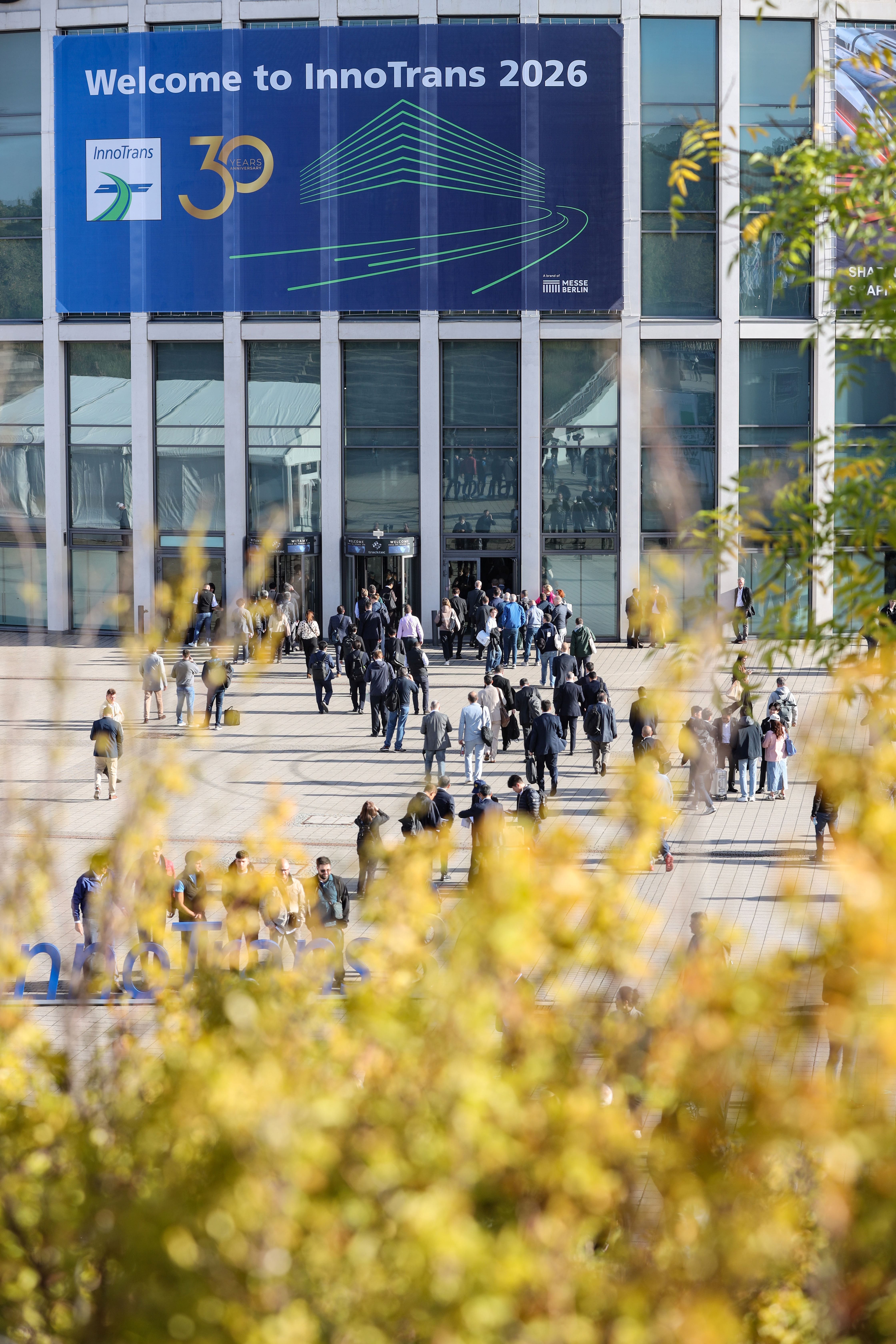
With aging fleets, increasing demands for availability and safety, and constant pressure on operating costs, operators and maintenance providers are looking to evolve their practices: how can they intervene at the right time, limit downtime, and extend the lifespan of equipment while keeping costs under control?
3 trends that particularly stood out to us at the trade show:
1️⃣ From predictive maintenance to even more operational maintenance
The technologies showcased at InnoTrans demonstrate a desire to move from data collection to its concrete application in maintenance decision-making: onboard sensors, remote diagnostics, equipment health models, and artificial intelligence make it possible to detect wear or anomalies before they cause downtime.
The challenge, however, is not just to have more and more data. It is to be able to transform this data into useful decisions for maintenance teams: identifying equipment to monitor, prioritizing interventions, anticipating failures, or adapting maintenance schedules.
2️⃣ Data: a key industrial resource
Its protection and sharing were at the heart of many discussions. Diagnostic and monitoring systems produce considerable volumes of information. But for this to create value, it must be structured, cross-referenced, and exploited over the long term. The challenge lies in the ability to connect different sources: maintenance data, failure history, operating data, information from sensors, and operational data.
Ultimately, this evolution raises an essential question: how can we circulate information while ensuring its quality, security, and storage?
At InnoTrans, the forums highlighted the importance of standardizing formats, interfaces, and data platforms as an essential condition for scaling up. "European standards must create economies of scale," said Heike van Hoorn, Managing Director of the German Transport Forum (DVF).
3️⃣ From maintenance to fleet performance
The cost and availability of fleets are increasingly prominent, hence the debates held by the VDB, the German Railway Industry Association, centered on "pay-per-use" models. In this model, payment is based on kilometers traveled: we no longer measure only the cost of a maintenance operation, but the ability to keep trains in service with a high level of reliability and a controlled life-cycle cost. In aviation, as in other industrial sectors, this business model has been in place for a long time. This raises a fundamental question for the sector: in the future, will we continue to buy only maintenance operations, or increasingly, fleet performance?
Today, this logic is reflected in the development at MASTERIS of services more focused on results and performance.
The maintenance of tomorrow will not replace the expertise of workshop teams. On the contrary, it will give them the means to intervene with greater visibility, precision, and efficiency.
The more capable systems become at detecting, measuring, and analyzing, the more essential human expertise becomes for interpreting results, arbitrating priorities, and deciding on the course of action.
The most sustainable train is not just the one that consumes less: it is also the one that remains reliable, maintainable, and high-performing for longer.
Resources and news

Your rolling stock, always on track.
Let's discuss your project together: a dedicated expert accompanies you at each stage.