


The summer of 2026 reminds us just how much extreme heat has become a major challenge for the rail sector. With heatwaves becoming more intense and prolonged, air conditioning is no longer just about passenger comfort. From equipment reliability and train availability to controlling operating costs, air conditioning has become a key issue for industrial performance.
From systems heavily strained during the summer months to aging equipment, operators face a dual challenge: ensuring service continuity while preparing their fleets for new climatic and regulatory constraints.
Anticipating obsolescence and regulatory changes:
Equipment designed 15 or 20 years ago was not necessarily sized for such demanding and recurring weather conditions. Added to this is a European regulatory framework that is becoming significantly stricter.
🔹 Anticipating obsolescence and regulatory changes : Equipment designed 15 or 20 years ago was not necessarily sized for such demanding and recurring weather conditions. Added to this is a European regulatory framework that is becoming significantly stricter. The F-Gas regulation is accelerating the phase-down of HFC refrigerants, with a new financial tax applied from 2026. At the same time, targeted REACH restrictions on PFAS ("forever chemicals") require anticipating technical replacement solutions and adapting existing equipment to ensure long-term operational safety.
🔹 Energy costs: Air conditioning system consumption weighs heavily on the energy balance of trains. Excluding traction, air conditioning accounts for 10% to 30% of a train's daily electricity consumption. On a long-distance train, this operating cost can rise by €80 to €120 per day. Improving heat exchange, optimizing air handling circuits, and adapting operating modes are all levers for reducing consumption without compromising passenger thermal comfort.
Faced with these challenges, fleet management requires rigorous anticipation.
To secure the equipment lifecycle, MASTERIS deploys regulatory and technological expertise that guarantees the immediate and future compliance of fleets.
Building on this expertise, MASTERIS supports operators throughout this journey, regardless of their rolling stock:
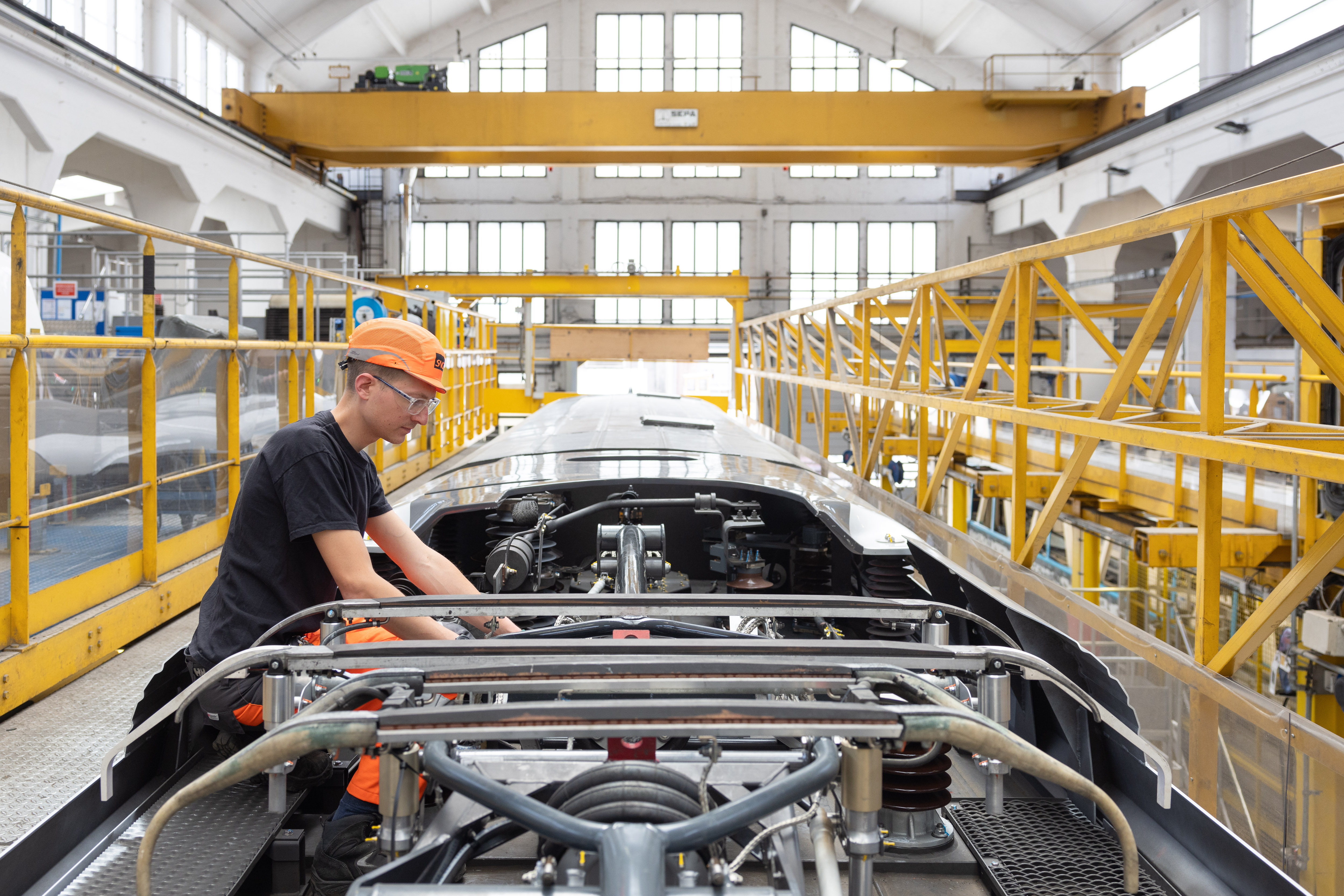
- Preventive and corrective maintenance : preventive and corrective maintenance, overhaul of air conditioning units, obsolescence management, supply of parts, and modernization of control-command systems.
- Equipment upgrades: studies of replacement solutions, adaptation to regulatory changes, and support in managing refrigerants, particularly through their recovery, regeneration, or replacement according to technical and regulatory possibilities.
- Energy optimization: thermal and air handling studies, optimization of operating modes, and evaluation of technical solutions to reduce energy consumption.
This expertise is based on the engineering and production components of @SNCF Voyageurs Matériel, which has years of feedback on various rolling stock fleets (approximately 35,000 HVAC units) and nearly 4,500 maintenance and modernization activities per year.
🔎 Customer reference : On a standard fleet of 20 CITADIS 302 trainsets equipped with 40 HVAC-heat pump units, our engineers measured a 25% reduction in electricity consumption, representing a potential saving of 460 MWh per year.
Because every fleet has its own unique constraints, there is no one-size-fits-all solution. MASTERIS builds customized support to balance passenger comfort, equipment durability, regulatory compliance, and energy performance, both in France and internationally.
📤 Contact our experts to assess your needs and build a tailored roadmap
🌐 Follow our LinkedIn page so you don't miss any of our latest news!
Resources and news


Your rolling stock, always on track.
Let's discuss your project together: a dedicated expert accompanies you at each stage.